
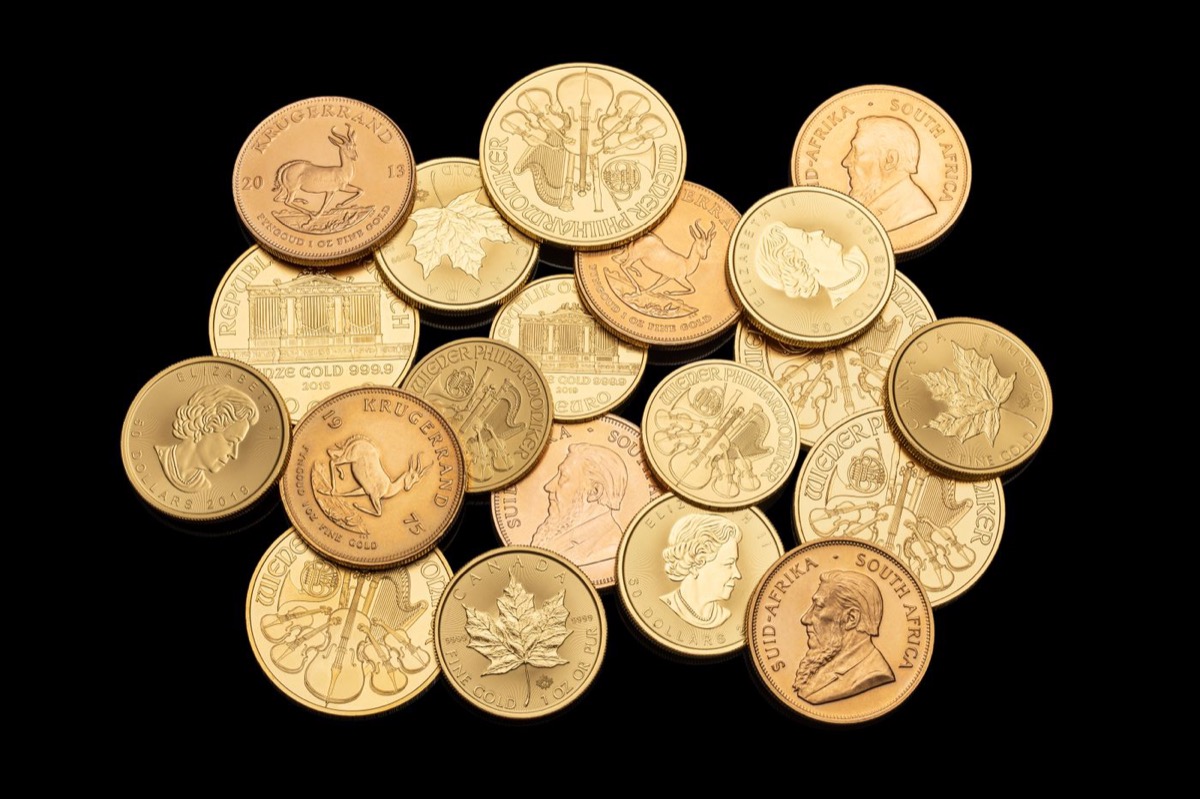
When an item is damaged or otherwise no longer usable in its original form, it often retains some residual value based on its materials or components. This residual worth is referred to as salvage value. Salvage value is defined in the 2021 Core Course Manual as: the amount that can probably be obtained from a damaged item or for the components of a damaged item (GL-11). All types of property can have a salvage value from fine art to antiques to appliances. For instance, a painting with a hole still has a salvage value in its current condition. Similarly, a broken appliance still has a salvage value as it may be sold for its parts.
A subset of salvage value, known as scrap value, specifically applies to items that can be broken down into raw materials, such as metals. Scrap value is defined in the 2021 Core Course Manual as: a kind of salvage value and is the amount that would probably be obtained for a property that was being broken up to obtain materials. It recognizes the intrinsic value of the materials comprising the original item, e.g., scrap steel in a wrecked car or the gold in damaged jewelry (GL-11).
Salvage and scrap values are commonly determined in contexts such as insurance claims, shipping damage, or property loss due to fire or flood. While salvage value generally applies to all types of damaged goods, scrap value is most often associated with metals and other materials that can be easily recycled.
Spot value is a component of determining scrap value. Spot value recognizes the intrinsic value of the materials used to create an item. Although not defined in the 2021 Core Course Manual, the definition of spot value for our context is the dollar amount assigned to an item based on the spot price of the underlying material, adjusted for weight and purity. This is the application of the spot price to a specific item and therefore the baseline value. While fair market value may be equivalent to spot value, it will likely not be lower. With that being said, it is important to conduct market research to determine whether your silver or gold item has a premium beyond its intrinsic components due to other value factors, including maker/designer, quality, condition, age, style, form, etc. For instance, many Georg Jensen pieces are highly collectible for their craftsmanship and design and routinely achieve prices well beyond spot value.
To calculate the spot value and the scrap value of an item, you need to follow the process below.
Calculating Spot Value – A Component of Determining Scrap Value
Metals and other goods that can easily be reduced to raw goods require special treatment when determining value. A spot value for gold, silver, copper, brass, iron, etc., can be determined through a few steps. The example below will focus on a sterling silver bowl.
Assume that your client has a sterling silver bowl that was dented in a move. You have been hired to conduct a broad evidence appraisal and one of your objectives is to determine scrap value.
All solid silver pieces should be weighed in troy ounces unless they are weighted (e.g., cement reinforced bases). The IRS Estate Tax Regulations, Valuation of Household and Personal Effects, 26 CFR, pt. 20.2031-6, states: Sets of silverware should be listed in separate groups. Groups or individual pieces of silverware should be weighed and the weights given in troy ounces. In arriving at the value of silverware, the appraiser should take into consideration its antiquity, utility, desirability, condition, and obsolescence. This is because an item made from solid silver has an intrinsic value that may or may not be worth more than its decorative value. While this guideline applies to federal estate tax, it is considered best practice to weigh all silver items in troy ounces in order to reflect industry standards.
The first step is to weigh the bowl in troy ounces. You can do this using a portable scale. If you only have a regular food scale, you can also weigh the silver bowl in ounces (oz) and then convert the ounces to troy ounces (ozt) using Google or an online calculator. Assume that the dented silver bowl weighs 10 troy ounces. For illustration purposes, a whole number is shown here, but in practice weights often include decimals. You may round to the nearest tenth or hundredth of a troy ounce. This figure represents the total, or gross, weight.
If the total weight of your item is 10 troy ounces it is important to remember that the item is not pure silver. If the item is sterling silver, then it is 92.5% (925/1000) silver. The actual weight of the silver in your item is 9.25 troy ounces. If the item was 800 silver, then it is 80% (800/1000) silver. Noting the purity is essential, as it is a necessary component of the formula.
Next, find the spot price of silver per troy ounce from financial websites, commodity exchanges, or market indices. The spot price of silver fluctuates daily due to market conditions such as supply and demand, geopolitical factors, and economic trends. Spot price is the current market price for a precious metal (gold, silver, platinum, etc.) in pure form, traded on global exchanges. Remember, you need to consider the spot price of silver as of the effective date of your appraisal. You can find the current and historical spot price of silver on many websites, such as www.kitco.com. You can also use google and search “silver spot price as of XX/XX/XX.” Note that spot prices are always given in troy ounces (ozt) because that is how bulk silver is traded on the commodities market.
If the effective date of the report falls on a weekend or holiday when there was no trading, you can use the closing ask price at the close of the market the last day it was open. As of September 26, 2025, the spot price of silver closed at $45.99.
The chart below illustrates silver spot prices from September 2024 to September 2025.

To calculate spot value, use the formula below:
Spot Value = Spot price as of the effective date x total weight of the item x purity
Spot Value of Bowl = Spot price ($45.99/ozt as of the effective date) x weight in troy ounces (10 ozt) x .925 (because sterling silver is only 925/1000 and not “pure” silver)
$45.99/ozt x 10 ozt x .925 = $425.41 ozt (rounded to nearest hundredth)
This is your spot value, which is the value of the precious metal content adjusted for weight and purity.
Online calculators are available, but these often populate with the current spot prices. You will likely have to change the price in these calculators once you figure out the spot price as of your effective date. Further, you may have to adjust the purity of your specific item as well.
Calculating Scrap Value
We consider scrap value because most sellers of silver and other metals/materials do not have access to the commodities market. Instead, most sellers need to sell to a middleman, either a refinery or to a pawn shop/dealer/jewelry store. The middleman takes a percentage of the spot value for processing fees, impurities, and their profit margin. The commission percentage will vary based on your area, and often the amount being sold, but is often 10-25% less the spot value. In other words, a middleman may offer 90% to 75% (or less) of the item’s spot value. You should investigate commission rates in your area by calling local pawn shops and jewelry stores and asking what percentage of the spot price they are offering for gold and silver.
To calculate scrap value, you need to take your spot value and multiply it by the middleman’s margin.
If a local pawn shop offered 85% of spot (taking a 15% commission), then scrap value would be calculated as below:
Scrap Value = Spot Value x Percentage of spot value paid for by the middleman
$425.41 ozt x .85 = $361.60 (scrap value rounded to the nearest hundredth).
Scrap value is most often determined in damage loss claims where you may be specifically asked to determine salvage/scrap value.
Conclusion
Scrap value is generally lower than fair market value because it reflects the net proceeds retained by the seller; thus, scrap value may correspond to marketable cash value. Fair market value, by contrast, is a hypothetical concept representing the price a willing buyer would pay to obtain the item (2021 Core Course Manual, 2-5). Just as a buyer’s premium is included in the purchase price, fair market value encompasses the full value of the precious metal content, which is spot value.
Understanding how to determine spot value and scrap value is essential for appraisers, particularly when working with precious metals. While spot value represents the market price of pure silver (or other metals) on global exchanges, scrap value reflects the practical amount a consumer would receive after selling through local channels that deduct processing and profit margins. By carefully weighing items, applying calculations, using the correct spot price as of the effective date, and adjusting for local commission rates, appraisers can determine scrap value.